Resume Writing Tips for 2026
Resume writing in 2026 combines AI insights with human storytelling to create standout applications for both algorithms and decision-makers. Effective resumes showcase your value through data, personalization, and industry-specific language, giving you an edge over generic submissions.
Tech job postings spiked by 40% last year, leading to an avalanche of resumes—many never passing automated filters. It's not just skills or achievements being overlooked; it's how your resume speaks to the hybrid workforce, integrates essential keywords, and connects with both bots and busy hiring managers.
Imagine you're a founder or marketer juggling tasks from pipeline forecasting to content sprints. Updating your resume often falls to the bottom of your list. When you finally tackle it, you wonder if that old template or clever summary is enough. If you're in SaaS or tech, you're likely craving insights: how do competitors present their expertise? What keywords drive visibility? Are you missing opportunities because you haven't turned analytics into action?
This isn't recycled "spellcheck and save as PDF" advice. Discover resume writing tips that matter in 2026—anchored in real-world results, not trends. From using AI without losing your authentic voice, to aligning achievements with metrics hiring teams track, consider this your roadmap to turning a stagnant resume into a living asset.
Why Your Resume Isn't Getting Noticed in 2026

Over 75% of resumes never reach a human. They get stuck—or trashed—by Applicant Tracking Systems (ATS) that screen everything before a hiring manager sees them Harvard Career Services. If your resume isn’t showing up for interviews, you’re not beating the robots.
The market's not getting kinder. Tech and SaaS roles have exploded, inviting heavier competition. Hundreds of resumes hit every listing, most following the same tired playbook.
What Makes a Resume Invisible in 2026?
It's not just about career highlights. If your format is confusing or has dense text blocks, ATS software will choke on it and auto-reject before a recruiter knows you exist.
Here's how this hurts: A founder at a fast-scaling SaaS startup shared how a potential hire slipped through the cracks. Their resume was packed with experience—Stanford grad, shipped products, managed teams. On paper? A dream candidate. In reality? Their resume had odd columns, icons for headings, and graphics. The ATS flagged it as "incomplete," so a recruiter never saw it. That role stayed open two more months, costing the company in lost momentum.
Bottom line: Even the best story won't matter if your resume isn't structured for machines and humans. Here's what to avoid and what works:
| Common Resume Mistakes | Best Practices for 2026 |
|---|---|
| Using graphics, text boxes, or columns | Stick to classic layouts—single column, no images |
| Overloading with keywords or jargon | Use relevant, natural language |
| Heavy blocks of text—no white space | Keep plenty of white space, bullet points |
| Creative fonts and colors | Use Arial, Calibri, or Times New Roman in black |
| Ignoring job description requirements | Match your experience to the actual posting |
| Saving as image PDFs or non-standard docs | Use .docx or standard PDF—never images |
| Listing every job since college | Highlight only the last 10-15 years, most relevant |
Key takeaway: ATS-unfriendly formatting is the #1 silent killer of resumes in tech, SaaS, and high-growth businesses.
How to Guarantee Your Resume Gets Seen
Make your resume easy for both an algorithm and a recruiter to read. Simple, right? Yet many overthink fonts, add unnecessary "flair," or cram information edge to edge. This is a mistake. Hiring managers want clarity, not creativity contests.
Actionable step: Use a clean, ATS-friendly layout—single column, no graphics, standard section headings (Experience, Skills, Education). Save as .docx or a well-formatted PDF. Don’t use tables, icons, or anything "fancy" that might trip up scanning software. Indeed’s resume guidelines spell this out with examples for every section.
If unsure whether your resume will pass, run it through a free ATS scanner or send it to a peer in hiring for honest feedback.
The harsh truth: Being "qualified" means nothing if your resume never shows up. In 2026, smart formatting isn’t optional—it’s essential. If you want your next opportunity, stop giving the bots a reason to ghost you.
What Are the Essential Elements of a Modern Resume?
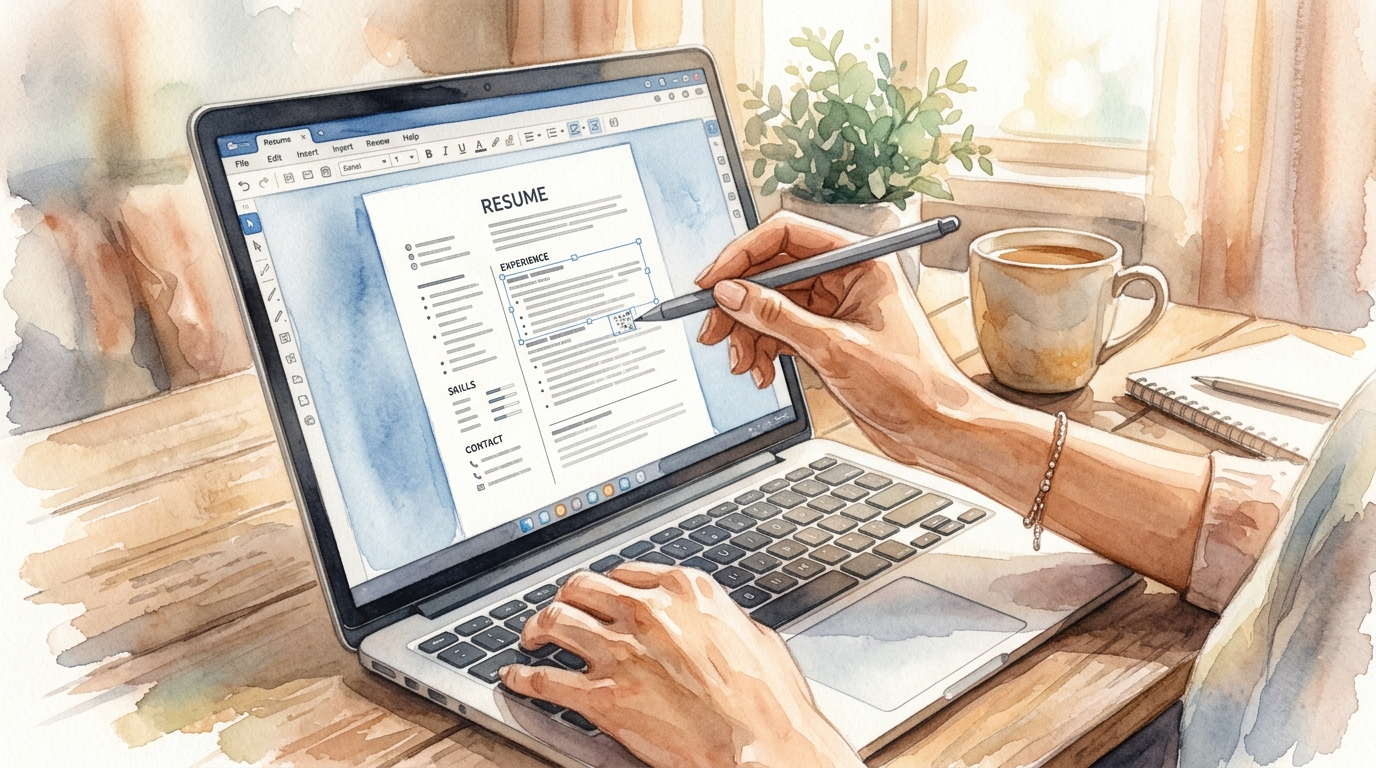
Picture a sharp, motivated candidate with years of experience, glowing references, and quantifiable results—someone who checks every box for the job. Yet their resume gets zero traction. Why? It's the same template they've used since the early 2020s. It looks solid, but to automated systems and modern recruiters, it screams "stuck in the past."
Over 75% of resumes in 2026 don’t make it to a human. They’re filtered out by automated tools that ignore files looking like relics [source: indeed.com]. If your resume still resembles what was deemed “professional” five years ago, you might as well not bother sending it.
What Really Belongs On a 2026 Resume?
A modern resume delivers your story in a format machines and humans both love. That means...
- Contact Information — Name, city and state (not your full address), phone, and a professional email. Sloppy Gmail address? Straight to the “no” pile.
- Professional Summary — Two to four punchy lines that spell out who you are and what you offer. According to recent research, 89% of recruiters now expect this at the top—a sharp summary saves them time and makes your case instantly careerservices.fas.harvard.edu.
- Work Experience — List recent roles, with company names, dates, specific achievements, and impact. Generic responsibilities do nothing for you.
- Education — Highest degree first, school name, graduation year only if it helps (skip if graduation was over 10 years ago for most industries).
- Skills — Laser-focused on what's in the job description. Hard skills, platforms, languages—use the keywords the robots (and recruiters) scan for.
Optional but valuable: awards, certifications, relevant side projects, or associations.
Key takeaway: If your resume doesn't lead with a tight summary and keywords tailored for bots, you’re invisible in today's market.
Where Most Candidates Get Stuck
It’s common for solid professionals to hang onto outdated formats. The “Objective Statement”? That died long ago. Tables, borders, wild fonts? Those confuse applicant tracking systems (ATS) and wreck your chances.
A traditional resume drowns recruiters in fluff—think laundry-list musings on “responsible for collaborating with teams” instead of real impact like “increased SaaS retention by 24% in one year.”
Modern vs. Traditional: A Real-World Example
Traditional:
Objective: Seeking a challenging position in a growth-oriented company.
- Responsible for project management
- Worked with teams on various projects
Streamlined, Modern:
Professional Summary:
SaaS content strategist with a track record of 8-figure growth campaigns, expert in LinkedIn analytics and B2B storytelling. Boosted organic engagement rates by 50% in 12 months.Work Experience (snippet):
Senior Content Marketer, Fintech Inc (2023–2026)
- Led LinkedIn campaign that grew followers by 30k in 6 months
- Built competitor benchmarking system, leading to a 15% increase in win rates
The difference? The modern version tells a story and loads every line with impact and metrics. It’s skimmable and ATS-friendly.
Why This Matters for 2026
The pace has changed: you’re up against automated resume bots as much as humans. Companies expect a clean, scannable, updated story, not a wall of dense career autobiography. The right elements—customized, clear, and current—put you ahead of the 75% who never survive the first digital screening.
Make every section count, lead with impact, and stop giving opportunity away to someone who simply formatted their achievements better.
For more insights, see Harvard’s latest resume advice, packed with templates and recruiter-backed tips (careerservices.fas.harvard.edu).
How to Tailor Your Resume for Different Industries
Recruiters in 2026 are moving at warp speed—on average, they spend just 6.4 seconds scanning each resume. Miss the mark on relevance, and your shot slips through the cracks. But when your resume highlights exactly what that industry wants? Suddenly, you’re not just noticed—you’re on the shortlist.
The secret is tailoring. Tailoring your resume means strategically highlighting industry-specific skills, experiences, and keywords that align with the sector you’re targeting. Generic, catch-all resumes still get deleted faster than a bad cold call. Customization is what gives you that big edge now that both human and AI screeners are ruthlessly efficient.
Does Using Industry Keywords Really Matter?
Ask any SaaS marketer who’s waded through the application trenches. One shared this: when they revamped their resume for SaaS roles—dropping in phrases like “customer retention,” “ARR growth,” and tools like “HubSpot CRM”—their interview rate jumped an eye-widening 30%.
That’s not some unverified resume myth. It’s proof: industry terms aren’t fluff—they’re your tickets past both software and humans. Most recruiters hit “next” the minute resumes look generic.
What Makes a Tech Resume Look Different from a Professional Services Resume?
The whole anatomy shifts based on the industry. Tech roles favor proof of hands-on impact, technical proficiency, and adaptability. Professional services demand polished communication, detail orientation, and mileage in structured environments.
Here’s a side-by-side rundown of what stands out for each:
| Criteria | Tech Industry | Professional Services |
|---|---|---|
| Top Section | Quick skills summary, recent tech stack list | Education, certifications |
| Skills Focus | Programming languages, agile, DevOps, user metrics | Project management, client engagement, compliance |
| Metrics | Product launches, user growth %, uptime stats | Billable hours, client satisfaction, deliverable timeliness |
| Language/Tone | Direct, results-focused, quant-heavy | Structured, polished, service-oriented |
| Format | Clean, bold subheads, even some color | Classic, conservative, (sometimes required templates) |
| Preferred Keywords | “API integration,” “cloud migration,” “automation” | “Process improvement,” “audit,” “stakeholder reporting” |
Using the lingo and metrics that matter to your industry isn’t a nice-to-have—it’s critical. You want the screener’s brain lighting up in those first seconds: “Yes, this person gets it.”
How Do You Research Industry Trends—and Actually Use Them?
Start with job descriptions from major players—not just one or two, but a few dozen. Trace the verbs, jargon, and “must-have” tools that keep popping up. Dig a layer deeper with industry blogs, recruiter explainer posts, and robust resources like the Harvard career services guide.
Zero in on patterns. Is “digital transformation” all over professional services now? Do SaaS roles obsess over NRR or LTV? Work these into your bullet points, not just a skills section. Each keyword isn’t just text for an ATS—it’s a signal that you understand what the market expects, and where it’s headed.
Bottom line: Tailoring your resume by industry isn’t about tweaking titles or reshuffling bullet points—it’s about aligning your entire story to what decision-makers are scanning for in seconds. If you’re serious about standing out, broad, one-size-fits-none resumes just don’t cut it.
The Role of AI in Resume Writing: Friend or Foe?
AI resume builders are everywhere now, promising instant ATS optimization and keyword-loaded resumes. But here’s the tough question: Why do so many candidates with slick, AI-generated resumes still get zero callbacks? The answer’s simple—AI can give you an edge with structure and buzzwords, but a carbon-copy document won’t convince a human to hire you. Real success comes from customization.
Can AI Really Help You Write a Better Resume?
AI can streamline you straight through the basics. It’ll analyze a job description, pick out the right skills, and pepper your experience with the hottest phrases hiring managers check for. That’s why 67% of job seekers in 2026 are using AI tools to boost their resumes—the tech is good at speaking “robot,” which is exactly what applicant tracking systems (ATS) demand.
Bottom line: AI can give you a head start by making your resume ATS-friendly, but you still need to inject your own story or risk sounding like every other applicant with access to ChatGPT.
Compare: AI-Generated vs. Professional Writer Resumes
Here’s a concrete look at what happens when you leave your fate to AI versus working with a seasoned resume pro:
| Aspect | AI-Generated Resume | Professional Writer Resume |
|---|---|---|
| Keyword Optimization | High: Matches JD keywords well | High: Tailors keywords with natural context |
| Personalization | Low: Generic wording, overused phrases | High: Unique value stories, real achievements |
| Voice / Tone | Robotic, polished but often bland | Human, engaging, tailored to industry |
| ATS Compatibility | High | High, with added context for human readers |
| Cost | Low ($0–$50 typical) | High ($200–$800+ typical) |
| Interview Win Rate | Medium (for basic roles) | High (especially in competitive fields) |
Key takeaway: AI resumes are a solid base layer but rarely land you interviews for top roles—especially in industries like SaaS, tech, or executive search, where differentiation and storytelling matter most.
What’s Missing in AI-Only Resumes?
The cold truth is that pure automation can tank your chances if you rely on it too much. ATS bots don’t care about your narrative, but hiring managers do. The “one-size-fits-all” approach falls flat, especially for founders, marketers, or anyone gunning for a leadership track.
Here’s why you shouldn’t hand over full control to AI:
- AI tools can’t reference confidential projects, sensitive business outcomes, or internal metrics unless you spell them out.
- Generic phrasing like “results-driven leader” shows up on a thousand other resumes—yours just gets lost in the pile.
- Examples are everything. “Increased MRR by $1.2M in 9 months” >>> “Responsible for increasing revenue.”
Expert insight: Resumes tailored to specific job descriptions are 45% more likely to win interviews—personalization is non-negotiable careerservices.fas.harvard.edu.
How to Get the Best of Both Worlds: 4-Step Action Plan
Want leverage? Let AI do the heavy lifting, then take the wheel:
- Draft with AI: Run your target job description through an AI resume builder. Let it generate the first pass, loaded with relevant skills and language.
- Customize Section by Section: Rewrite your “About” or “Summary” and work experience bullets to showcase real outcomes, naming clients, products, or numbers that set you apart.
- Sense-Check for Voice: Replace robotic phrasing. If it doesn’t sound like how you’d pitch yourself out loud, swap it for something authentic.
- Optimize and Track: Use an analytics tool like LinkPilot to see which resume versions help you get callbacks—or reveal which keywords routinely get traction across the competition.
The smartest job seekers treat AI as a launchpad, not a ghostwriter. Use it to hit ATS benchmarks, but don’t skip over the personal touch that lands you in the “interview” stack.
AI isn’t your enemy, but thinking it can tell your story for you is a huge mistake. Build the bones with tech—fill in the details only you can provide.
How to Leverage LinkedIn Insights for Resume Enhancement
LinkedIn analytics aren't just decoration—they're the fastest reality check on whether your story is getting attention or collecting dust. If you want a resume that gets past the “meh” pile in 2026, there’s no excuse for flying blind anymore. The data’s sitting right there, waiting to tell you if your headline lands, your skills are relevant, or if recruiters scroll past you like yesterday’s news.
How can LinkedIn insights help improve your resume?
LinkedIn insights show you, in black and white, which skills and experiences your audience actually cares about. Instead of guessing what matters, you see which keywords, roles, or achievements drive the most profile visits, connection requests, and messages. If your resume says “cloud transformation expert” but LinkedIn data shows no engagement with that skill, you’ve got a mismatch—and that’s costing you visibility.
For founders, content marketers, and anyone in SaaS or tech, this feedback loop is a goldmine. Pulse-check your top skills by reviewing profile view spikes, engagement rates on featured posts, or even the companies that checked you out. That’s market intelligence traditional resume feedback just can’t match.
How does a real founder use LinkedIn data to uncover resume gaps?
Imagine this: an entrepreneur in B2B SaaS keeps landing discovery calls but never gets beyond first contact. Frustrated, they review their LinkedIn analytics for the past quarter. Engagement is high on content mentioning “product-led growth” and “remote onboarding”—but their resume barely touches these themes, sticking to old-school “sales-driven expansion.”
They adjust the resume headline, rewrite bullet points to spotlight experience scaling remote onboarding, and fold in data-backed results tied to PLG. Results? Recruiter profile views double, and inbound job leads start referencing exactly those new keywords.
That’s how you turn numbers into narrative—and make your next career move data-driven, not wishful thinking.
What actionable steps turn LinkedIn insights into resume wins?
Here’s the playbook: after your next LinkedIn post or profile update, spend time in the analytics panel. Are you seeing a spike in views after tweaking your About section? Are specific keywords in your skills or endorsements drawing more industry professionals and recruiters? If so, audit your resume so it reflects these exact signals.
Analyze which core competencies keep audiences engaged. If “AI content optimization” or “B2B community-building” is pulling in traffic, but those phrases are missing from your resume, you’re leaving money on the table. Align those high-engagement skills or achievements directly with the bullet points at the top of your next resume draft.
Ignore LinkedIn data, and you’re essentially relying on feedback from your last hiring manager, which is like driving through a rainstorm with yesterday’s weather report.
LinkedIn Insights vs. Traditional Resume Feedback
There’s a world of difference between waiting weeks for a recruiter reply and having a live dashboard showing what’s actually working.
| Feature | LinkedIn Insights | Traditional Resume Feedback |
|---|---|---|
| Speed | Real-time (daily/weekly) data | Delayed (after submission) |
| Scope | Broad—shows market-wide engagement | Limited—often a single reviewer |
| Specificity | Pinpoints which skills/roles drive interest | General comments, often vague |
| Benchmarking | Compares your profile to industry peers | No direct benchmarking |
| Actionable Metrics | Measurable: views, clicks, connection requests | Subjective: “needs more impact” |
| Feedback Source | Recruiters, peers, competitors, algorithms | Hiring manager or resume coach |
If you want to win in 2026, start treating LinkedIn analytics like an ongoing feedback loop, not an afterthought.
Key takeaway
Bottom line: the smartest professionals let LinkedIn insights dictate resume strategy—not outdated advice or boilerplate feedback. Every data point is a clue to what lands you interviews. Ignore it, and you’ll trail behind candidates who know exactly what their market wants.
For a deep dive on aligning your resume with what employers need, Harvard Career Services offers targeted guidance that’s worth a bookmark.
Future-Proofing Your Resume: Trends to Watch in 2026 and Beyond
Picture this: a SaaS founder, fed up with lackluster responses, leverages LinkedIn profile analytics to overhaul her resume. She discovers the projects and keywords most attracting recruiter views and engagement. After weaving these insights into a new, interactive resume (infused with a brief intro video and clickable achievement links), interview invites spike—her engagement rate jumps by over 30%. Profiles optimized with LinkedIn insights aren’t just a “nice to have” anymore; they're a requirement if you want to keep up.
The landscape is shifting fast. Future resumes are moving past the static PDF and into dynamic, multimedia territory. So, if you’re still sending out basic Word docs while competitors embed video intros or link to living portfolios, you’re quietly taking yourself out of the running.
What resume trends should you watch in 2026?
By 2026, forward-leaning companies want more than timelines and bullet points. According to recent research, 40% of employers are either piloting or planning to accept video resumes as part of the application process this year. That’s not a gimmick—it’s a wake-up call. The market is demanding more proof of adaptability and digital savvy at first glance.
Bottom line: Start integrating interactive features into your application materials, or risk looking outdated the second your resume hits an ATS.
How do interactive resumes compare to traditional ones?
Traditional resumes:
- Usually limited to text and basic formatting
- Can’t showcase personality or communication style directly
- Force applicants to describe, not demonstrate, key skills
Multimedia-enhanced resumes:
- Let you deliver a short elevator pitch via embedded video (think 60 seconds max)
- Support clickable links to live case studies, product demos, or public code repos
- Use infographics or charts to visualize achievements—like revenue growth or user acquisition spikes
- Can even integrate a QR code for instant access to a personal website or LinkedIn page
Companies love these because they see not just your experience, but your ability to present it—critical for roles requiring sales, growth, or evangelism skills.
If you’re applying to roles in technology, SaaS, or content marketing, expect these features to become the default before the year’s out.
Why are digital resume elements so powerful?
Resumes with digital elements (even if it’s as simple as an embedded video or interactive PDF) are quickly becoming the gold standard. Here’s why:
- They instantly differentiate you: Not even 1 in 10 resumes reflect this trend yet, but the number is climbing.
- You control your narrative: Video lets recruiters see your enthusiasm and communication skills before meeting. Interactive links mean recruiters aren’t guessing what “launched successful campaign” means—they can click and see real results.
- ATS compatibility is no longer a concern: Many applicant tracking systems now parse multimedia and interactive PDFs without a hitch, especially in tech-forward industries.
Steps you can take right now
Don’t wait until “video required” is stamped on every job posting. Get ahead by:
- Recording a 30-60 second introduction (think: elevator pitch, not movie trailer). Host on Vimeo or YouTube, then link or embed.
- Creating an interactive PDF—easy in tools like Canva or Adobe Express—which includes clickable links to your portfolio or LinkedIn.
- Adding data visualizations (revenue charts, conversion boosts, traffic spikes) instead of just text descriptions.
- Embedding a QR code that points straight to your portfolio from a printed or static file.
For a deeper breakdown of what makes a resume stand out now, check guides from Harvard Career Services and Indeed—they both spotlight the same trajectory: interactive, insights-powered resumes win attention.
One key takeaway: Every digital enhancement is a chance to show—not tell—how you’ll perform.
The professionals landing top-tier offers in 2026 aren’t passively reacting to hiring trends. They're using data, embracing interactivity, and making every touchpoint in their resume an argument for their future potential. That’s how you make your application future-proof—while everyone else is still stuck in last year’s playbook.
Ready to Land That Interview?
The most important takeaway? Personalize every resume. In 2026, a one-size-fits-all approach won’t get you noticed—tailor your resume for each role, highlighting the skills and achievements that matter most to the industry and employer. Use AI-powered tools and LinkedIn insights to refine your content and stay on top of emerging trends. Solutions like LinkPilot can streamline the process and help you stand out with data-driven, optimized resumes. Take the time to update your resume now and keep it future-ready—you’ll thank yourself when the next big opportunity comes knocking. Stay proactive, stay relevant, and let your resume open doors in the year ahead.
For additional resume writing tips, explore expert advice on crafting resumes that resonate in today’s competitive market. If you want a comprehensive approach, this step-by-step guide to writing a resume offers practical techniques to build a strong foundation.
Additionally, consider how content writing services can improve your resume by enhancing clarity and impact, helping you tell your professional story more effectively.