If you want to get a great recommendation on LinkedIn, you have to do more than just click the "request" button. You need to personalize your message, make it incredibly easy for the other person to say yes, and tell them exactly why you're asking them.
A generic, copy-paste request is easy to ignore. On the other hand, a thoughtful message that mentions a specific project you worked on together or a skill you admire in them? That’s almost guaranteed to get a detailed, powerful response.
Why LinkedIn Recommendations Are Your Secret Weapon
Before we get into the nuts and bolts of how to ask, let’s quickly cover why these recommendations are so important in the first place. A strong recommendation isn't just a nice digital pat on the back; it's potent social proof that validates your skills in a way your own profile never could.
Think of it as a trusted, third-party endorsement. It builds immediate credibility with anyone who lands on your profile, from recruiters to potential clients.
This kind of trust is invaluable whether you're actively job hunting, trying to land new clients, or just building your professional brand. Recruiters see it as a verified testament to your performance. Potential clients see it as a way to de-risk their decision—proof that you actually deliver on what you promise.
Building Authority and Visibility
Good recommendations don't just build trust; they also send strong signals to the LinkedIn algorithm about your expertise. Every testimonial is like a vote of confidence, which can boost your visibility in search results and cement your status as an authority in your field.
This is a game-changer for a few key groups:
- Founders and consultants: More recommendations often lead directly to more inbound leads and a stronger industry reputation.
- Sales professionals: They act as mini-case studies that can help you close deals faster.
- Job seekers: They give you a serious edge by providing concrete proof of your skills, setting you apart from a sea of similar candidates.
It all comes down to simple psychology: we’re wired to trust what other people say about someone far more than what that person says about themself. A well-written recommendation carries more weight than any skill you list on your own profile.
Shaping Your Professional Story
Ultimately, recommendations give you more control over your professional story. They are testimonials told by others that back up the narrative you're building about your career.
A resume just lists what you've done. A recommendation explains how you did it and the positive impact you made along the way. This extra layer of depth transforms your static profile into a living, breathing portfolio of your accomplishments.
Understanding this impact is crucial, and so is knowing how to get more eyes on your profile in the first place. You can learn more about increasing your impressions on LinkedIn in our other guides, which makes every recommendation you get even more powerful.
Picking the Right People for Powerful Recommendations
Let's be honest, not all recommendations are created equal. Who you ask is just as important as how you ask. The most compelling testimonials come from people who have seen your work up close and can speak directly to the value you bring. It's tempting to just ask your favorite work buddy, but a more strategic approach will build a much more powerful profile.
Your goal should be to gather a diverse set of endorsements that, together, paint a complete picture of who you are as a professional. A rave review from a former manager is gold for highlighting your performance and work ethic. But a testimonial from a client? That's priceless for proving you can deliver real-world results.
This is why putting some thought into it is so crucial. The right recommendations don't just fill space on your profile; they actively work for you.
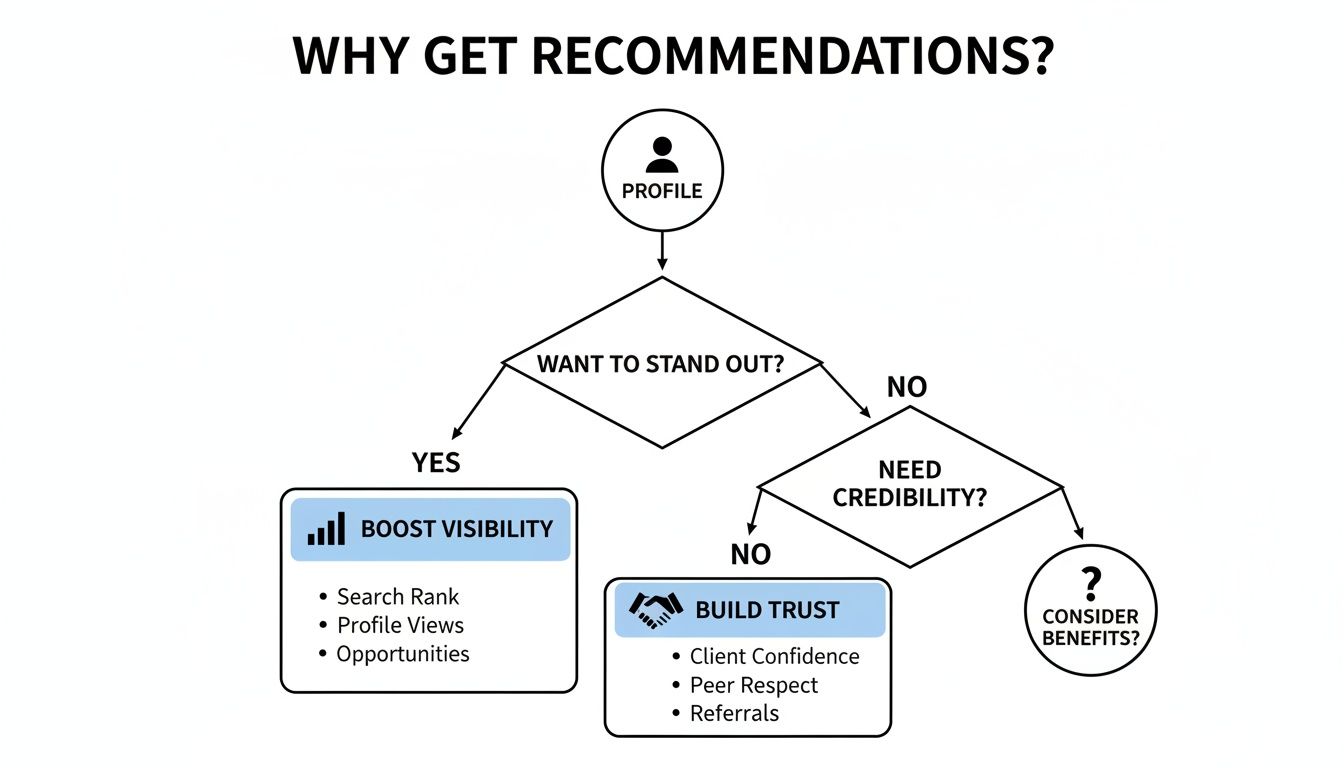
As you can see, these testimonials do double duty: they help you show up in more searches and build immediate trust with anyone who lands on your page.
Who to Ask for a Recommendation Based on Your Goal
The best person to ask depends entirely on what you're trying to achieve. Are you gunning for a promotion, trying to land new clients, or changing careers? Each goal calls for a different kind of recommender.
This table will help you map your goals to the right people in your network.
| Your Goal | Who to Ask | Why It Works |
|---|---|---|
| Land a new job in a similar role | Former Managers & Team Leads | They can vouch for your day-to-day performance, reliability, and specific achievements, which is exactly what recruiters want to see. |
| Attract more freelance clients | Past or Current Clients | Client testimonials are social proof. They show potential customers you can solve their problems and deliver tangible value. |
| Move into a leadership position | Direct Managers & Senior Colleagues | These individuals can highlight your initiative, project management skills, and ability to lead and motivate others. |
| Showcase collaborative skills | Peers & Cross-Functional Teammates | A colleague you worked closely with on a tough project can speak to your teamwork, communication, and problem-solving skills in a way a manager can't. |
| Transition to a new industry | Mentors, Colleagues, or Clients from relevant projects | Find people who can speak to your transferable skills—like strategic thinking or communication—that apply directly to your target industry. |
| Strengthen your academic profile | Professors or Academic Advisors | If you're a recent grad, they can attest to your work ethic, intellectual curiosity, and foundational knowledge. |
Thinking through this simple alignment ensures every recommendation you get is strategically building the professional narrative you want to project. It's a targeted approach that makes a real difference.
Pinpoint Your Ideal Recommenders
Okay, time to make a list. Before you send a single message, take a few minutes to scan your network. The best recommendations will come from people who have recent, direct, and positive experience with you.
Timing is everything. Someone you worked with five years ago probably won't remember the specific details that make a recommendation pop.
Think about people from different corners of your professional life:
- Former Managers or Team Leads: They have the authority to speak about your performance, your reliability, and how you contributed to the team's wins.
- Clients or Customers: Their words are powerful case studies. They provide concrete proof that you can solve problems and deliver on your promises.
- Colleagues or Peers: Someone you were in the trenches with on a major project can give a firsthand account of your teamwork skills that a manager might have missed.
- Mentors or Professors: Especially valuable if you're early in your career, they can speak to your potential, your character, and your core knowledge.
I see this mistake all the time: people think they need a recommendation from the most senior person they know. A detailed, specific endorsement from a direct manager who saw your work every day is far more valuable than a generic one-liner from a C-level executive who barely knew your name.
Once you have a shortlist, filter it through your current career goals. If you're a consultant looking for clients, make those client testimonials a priority. If you're aiming for that next promotion, focus on getting recommendations from managers who can speak to your leadership potential. This kind of thoughtful outreach is critical, especially since the days when manual LinkedIn outreach was effective are long gone.
How to Craft a Personalized Request They Can’t Say No To
Hitting that generic "request recommendation" button on LinkedIn is the digital equivalent of a limp handshake. It’s forgettable, shows minimal effort, and often gets you either ignored or, worse, a lukewarm, copy-paste response that adds zero value to your profile.
If you want a glowing recommendation that actually helps you, you have to get personal.
A custom message shows you respect their time and genuinely value their perspective. It’s a simple gesture that makes a massive difference. Think about it: LinkedIn data shows that personalized connection requests boost acceptance rates from under 10% to as high as 20-25%. The same logic applies here. A thoughtful note proves you’re not just spamming your network—you’re asking them for a reason. You can dig into more of these insights with these LinkedIn statistics.
What Every Great Request Should Include
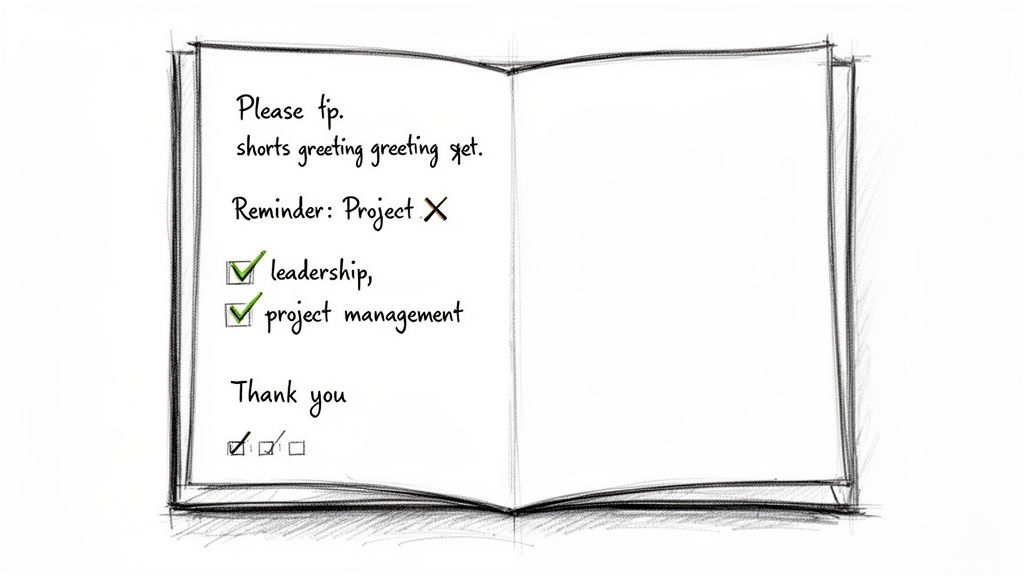
A truly effective request does more than just ask; it makes it incredibly simple for the other person to write something fantastic. You're essentially giving them a cheat sheet.
Here’s what I’ve found works every time:
- Jog their memory. Don't make them guess. Gently remind them of a specific project you worked on, a big win you shared, or a tough challenge you tackled together. This gives them immediate context.
- Give them specific prompts. This is the secret sauce. Instead of a vague "can you write me a recommendation?" ask them to highlight specific skills. This removes the mental burden of "what should I write?" and guides them toward the strengths you want to showcase.
- Offer to reciprocate. Always thank them for their time and offer to write a recommendation for them in return. This turns a one-sided ask into a genuine, mutually beneficial exchange.
A great request doesn't just ask for a favor; it provides a framework. By reminding them of a shared success and suggesting key skills, you're not putting them on the spot—you're handing them the building blocks for a fantastic recommendation.
Message Templates You Can Steal and Adapt
Here are a few real-world examples I've used. Notice how they follow that simple structure, making the request feel authentic and considerate.
For a Former Manager
"Hi [Manager's Name],
Hope you're doing well! I'm spending some time updating my LinkedIn profile and was hoping you might be open to writing a brief recommendation about our work together at [Company Name].
I was thinking back to the [Project Name] initiative and how much I learned from your leadership on [Specific Skill, e.g., client negotiation]. If you have a moment, I'd be so grateful if you could touch on my project management skills and how I led the team to that 15% increase in efficiency.
No pressure at all if you're swamped, but your support would mean a lot. I'd be more than happy to write a recommendation for you as well.
Thanks so much, [Your Name]"
For a Former Client
"Hi [Client's Name],
It was a real pleasure working with you on the [Project Name] last year. I hope your team is still seeing fantastic results from the new system.
I'm working on building my presence in the [Industry] space, and a recommendation from you would be a huge help. If you're open to it, I was hoping you could share a few words about your experience. It would be particularly helpful if you could mention my ability to [Specific Value, e.g., understand your unique needs and deliver a solution on time and under budget].
I know you're busy, so no worries if the timing isn't right. Thanks for even considering it!
Best, [Your Name]"
By making your approach personal and context-rich, you’re doing more than just asking for a favor—you're co-creating a powerful part of your professional story. And if you're looking to apply these principles at scale, check out our guide on effective content creation strategies that can work hand-in-hand with your outreach efforts.
So, You've Hit Send. Now What?
Sending out your requests is just the first step. The real art lies in how you handle things after you click "send." A little bit of professional grace goes a long way here, and having a simple workflow will help you get the recommendations you need while actually strengthening your relationships.
It's easy to get antsy waiting for a reply, but take a deep breath. Remember, the people you've asked are busy professionals, just like you. Give them some breathing room—a week is a pretty solid timeframe before you even think about following up.
How to Follow Up Without Being Annoying
Okay, so it's been a week and you've heard nothing but crickets. It’s totally fine to send a gentle nudge. The key is to be a friendly reminder, not a nagging demand. Keep it light, show you understand they're busy, and make it clear there's no pressure.
Here’s a quick script I've used that works wonders:
"Hi [Name], just wanted to quickly follow up on my request for a LinkedIn recommendation last week. I completely understand if you're swamped, so no worries at all if the timing isn't right. Just wanted to bring it back to the top of your inbox in case it got buried. Hope you're having a great week!"
This little message does a few things perfectly. It shows you respect their time, takes the pressure off, and serves as a simple reminder. More often than not, this is all it takes to get a response without ruffling any feathers.
Reviewing and Approving Your New Recommendations
When that notification finally pops up, don't just blindly accept it. LinkedIn gives you full control to review every recommendation before it goes live on your profile, and you should absolutely use it. Read through it carefully for tone, clarity, and accuracy.
Most of the time, they'll be fantastic. But every now and then, a well-intentioned colleague might make a small typo or misremember a specific detail. If you have a good rapport with them, it's perfectly acceptable to politely ask for a quick revision.
- To fix a typo: Try something like, "Thank you so much for this! It's fantastic. I noticed a small typo in the project name—would you mind updating 'Project ABC' to 'Project XYZ' when you have a moment?"
- To add a key detail: You could say, "This is so generous, thank you! Would it be possible to mention the 20% growth metric we achieved? I think that would really add some punch."
The trick is to lead with genuine appreciation and then make your request specific and easy to handle.
Don't Forget to Say Thanks (and Return the Favor)
This part is non-negotiable. As soon as you accept the recommendation, send a personal thank-you message. A public comment is nice, but a private DM is so much better. It shows you truly value the time and thought they put into writing it for you.
Want to take it a step further? Offer to write a recommendation for them in return. This is the ultimate pro move. It transforms a simple request into a genuine, two-way professional relationship. Don't wait to be asked—be proactive. It builds incredible goodwill and leaves a lasting positive impression that they won't forget.
Common Mistakes to Avoid When Asking for a Recommendation
Even when you have the best of intentions, it's surprisingly easy to trip up when asking for a recommendation. A small misstep can get your request ignored or, worse, earn you a lukewarm response that does more harm than good. Think of this as a quick gut-check to make sure your approach is professional, respectful, and actually gets you the glowing review you deserve.
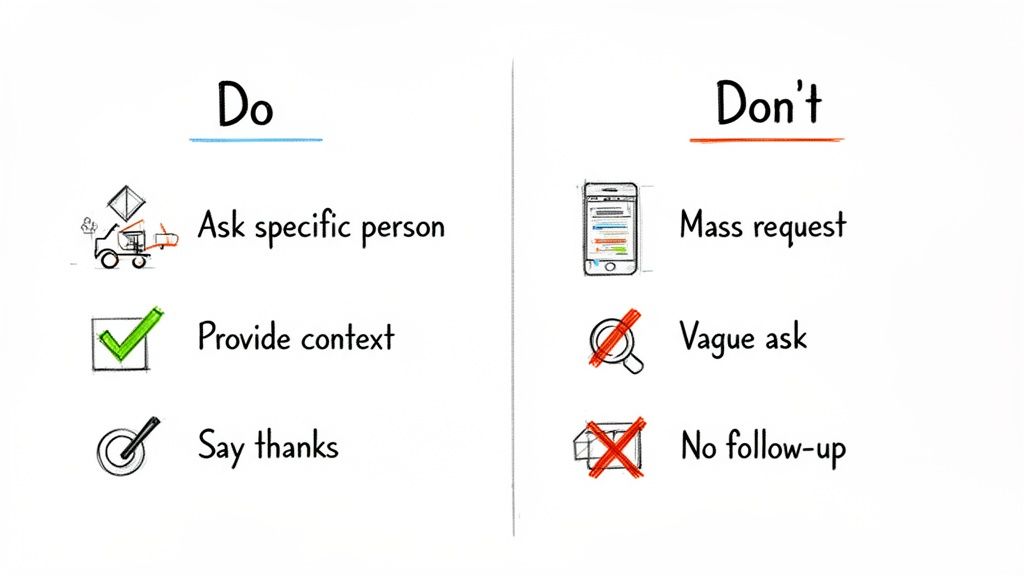
The Impersonal Mass Request
Want to get ignored? The fastest way is to send a generic, one-size-fits-all message to a dozen people at once. It feels like spam because, well, it pretty much is.
Busy professionals can spot a copy-paste job from a mile away. It immediately signals that you haven't put any real thought into why you're asking them specifically, and it makes them feel like just another name on a list. That's not exactly inspiring.
Asking Someone Who Barely Knows You
I get it, it’s tempting. You see a high-profile exec in your network and think their name would look great on your profile. But if they don’t have direct, firsthand experience with your work, what can they honestly say?
The recommendation will either be so vague it’s useless, or they’ll just hit delete.
A detailed, glowing review from a direct manager who saw you in the trenches every day is infinitely more valuable than a generic, one-sentence endorsement from a C-suite executive who barely knew your name.
Quality and specificity matter far more than a fancy job title. Recruiters want to see proof, and that comes from people who can provide real examples of your work.
Making Your Request a Chore
This is probably the biggest mistake I see. Vague requests like, "Hey, can you write me a recommendation?" put all the work on the other person. You're forcing them to rack their brain, recall specific projects, and figure out what you want them to say.
This is a surefire recipe for procrastination. They'll put it off, and if they ever get around to it, the result will be generic.
Don’t make them work for it. A great request removes all the friction.
- Jog their memory: Mention a specific project you worked on together.
- Give them a starting point: Guide them on what to highlight. Try something like, "Your thoughts on my project management skills during the Q3 launch would be amazing."
- Keep it brief: Respect their time. A short, clear, and direct message is all you need.
Forgetting the Follow-Through
Your job isn't over once you hit "send." I see two major follow-through fumbles that can sour professional relationships. The first is being too pushy. A single, gentle reminder after a week or so is fine. Bombarding them with messages just feels desperate and demanding.
The second, and more critical, mistake is forgetting to say thank you. Someone just took time out of their busy day to help you build your career. Failing to send a personal thank-you note is a huge misstep.
It’s a small gesture, but it leaves a lasting impression. Acknowledge their effort and, when it feels right, offer to return the favor. This simple act of reciprocity shows you value the relationship, not just the transaction.
A Few Lingering Questions…
Even with the best plan, you'll run into odd situations that make you pause. What's the right move? Let's tackle some of the most common questions that come up when asking for a recommendation.
How Long Should I Wait Before Following Up?
Give it a week. That's the sweet spot.
Life gets in the way, and a well-intentioned person can easily forget. A single, polite follow-up after seven days is all it takes to gently bump your request back to the top of their to-do list. This shows you're on the ball without being pushy, and it signals that you respect their time.
What if I Get a Recommendation I Don't Like?
This is a common fear, but the solution is simple: you have 100% control. Nothing goes on your profile without your approval.
If a recommendation misses the mark or just feels a bit… off, you can simply ignore it. The person who wrote it will never know you didn't publish it. No awkward conversations necessary.
But what if it's from someone important and it's almost perfect? LinkedIn has a built-in feature for this. You can send it back with a friendly request for a small edit.
Try messaging them something like, "Thank you so much for writing this! Would you mind tweaking the part about Project X to mention the specific outcome we achieved? No worries if you're swamped, but it would be a huge help!" This keeps things positive while guiding them toward a more impactful testimonial.
Is It Okay to Offer to Write One First?
Not only is it okay, it's one of the best moves you can make. Offering a recommendation before you ask for one flips the entire dynamic.
Think about what this does:
- It creates goodwill: You've already done them a favor, making them much more likely to return it. It's human nature.
- It shows you're a giver: This signals that you're invested in their success, not just your own.
- It sets the bar: Your high-quality, detailed recommendation subtly shows them what a great one looks like, often inspiring them to do the same for you.
Can I Ask for a Recommendation to Highlight a New Skill?
Yes, you absolutely should! This is a fantastic way to build credibility in an area you're trying to grow into. While endorsements are nice, a detailed, written recommendation that speaks to a specific skill is far more convincing to anyone checking out your profile.
The key is to be direct. Don't make them guess.
For example, say something like, "I'm working on strengthening my profile around data analysis. I was hoping you could write a few lines about my work on the Q4 report, specifically how I used data to uncover those key market trends." This gives them a clear, easy-to-follow prompt and ensures you get a recommendation that perfectly supports your career goals.
Ready to grow your LinkedIn presence without the daily grind? LinkPilot uses a team of AI agents to research, plan, and create on-brand content, so you can build authority and attract leads consistently. Start growing for free at https://link-pilot.com.